8
Jan
Research 2
Growth Characteristics: Hybridization in Clams to Achieve Efficiency and Larger Markets
We conducted on-farm research to replicate growers’ experience and real life to determine viability of growing hybrids clams in Sapelo, GA. We measured several growth characteristics including survival, shell length, shell width, total weight and wet meat weight.
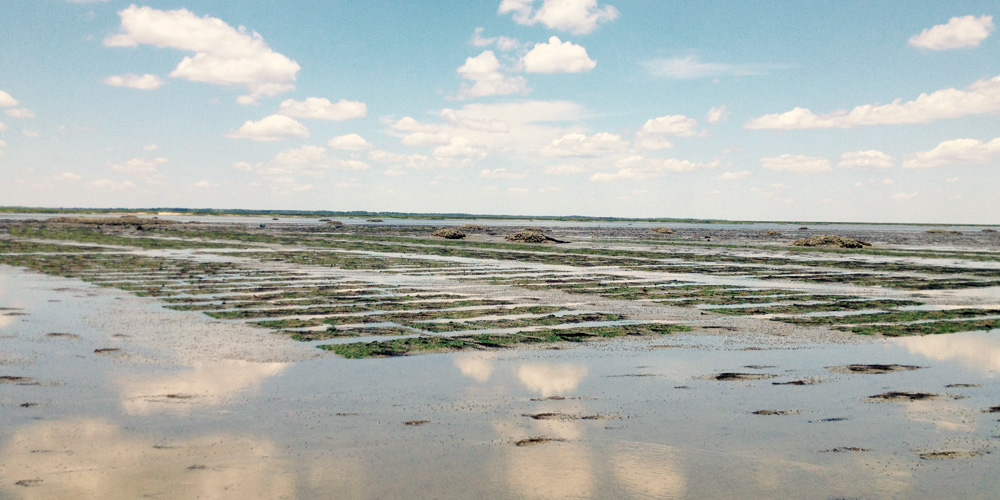
Clam Production at Experimental Site in Sapelo, Ga.
Survival
In terms of survival, M. mercenaria had a higher survival rate, 94%, compared to 89 percent for the hybrids. Table 1.
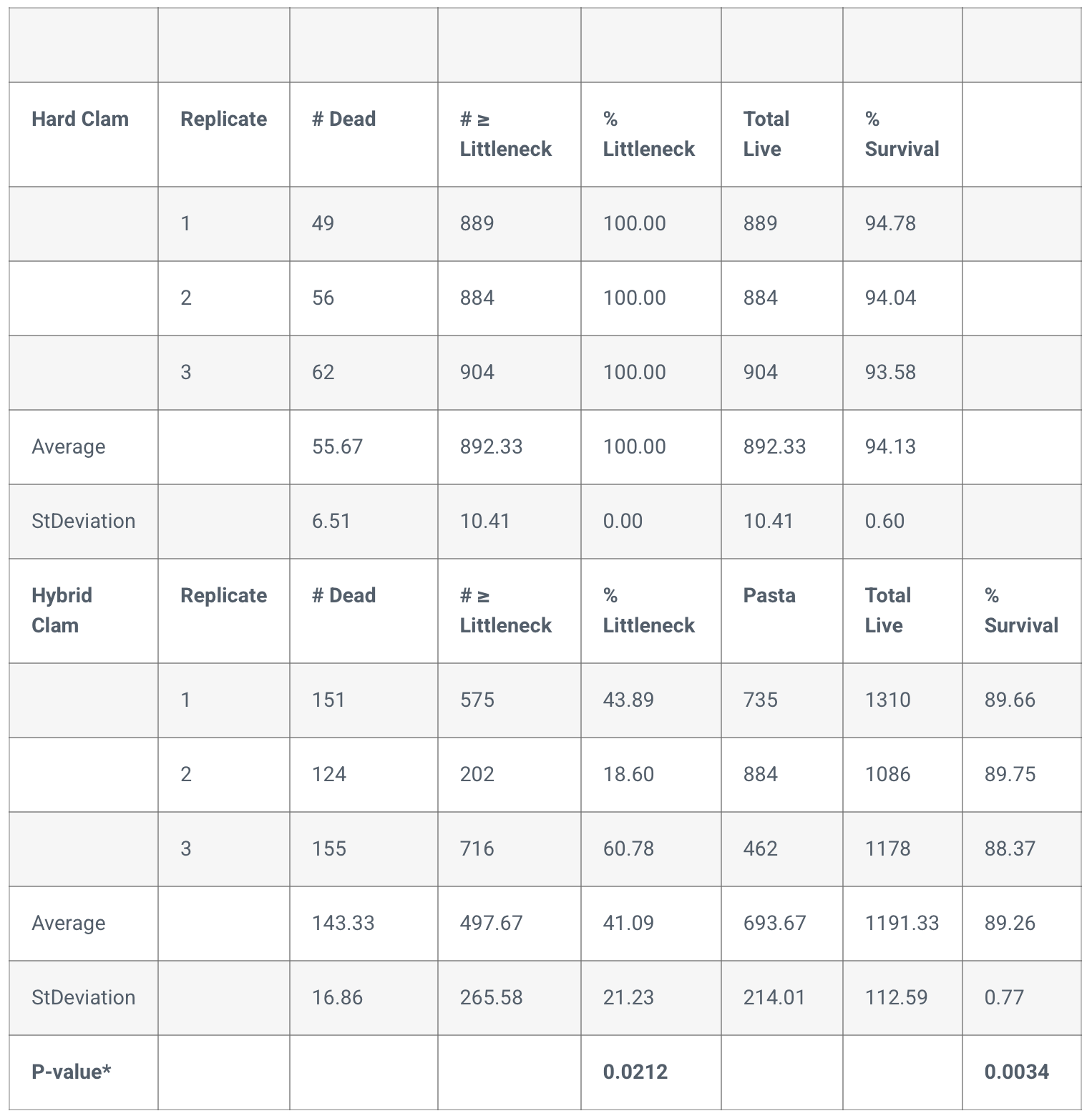
Although statistically different, the survival rates for both clams is high and acceptable. It should be noted that in Florida, survival rate can be as low as 50% due to the high water temperature conditions in summer.
Growth Characteristics
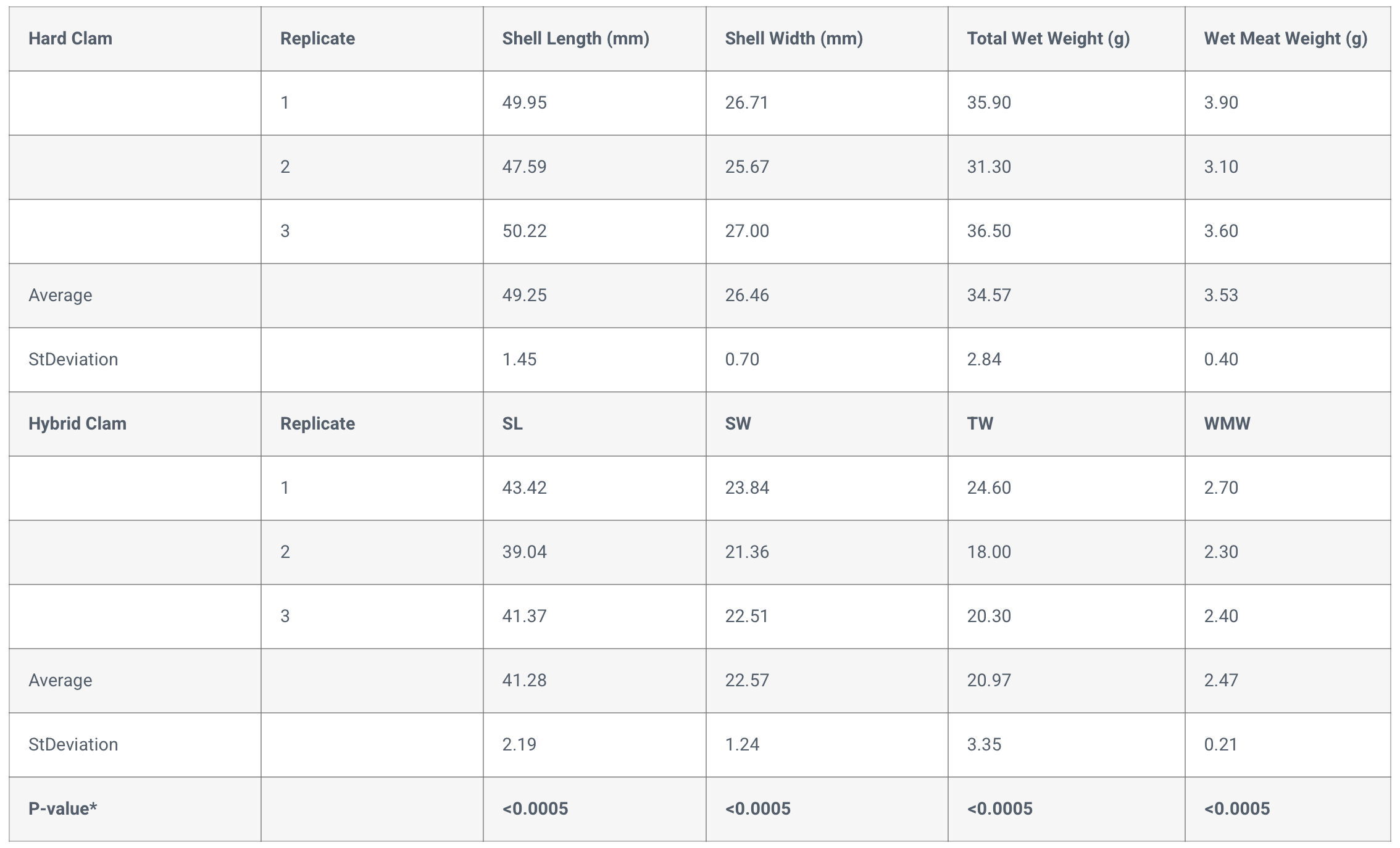
M. mercenaria overall grew bigger than the hybrids. Growth parameters including shell length, shell width, total weight and wet meat weight were greater for hybrids compared to M. mercenaria. Table 2.
Table 2. Comparison of shell Length, Width, Total Weight and Wet Meat Between Two Clam Types